
In the dynamic world of cryptocurrencies, one name that stands out is Max Keiser. As a man in my 40s navigating the crypto seas, I was introduced to Keiser as a staunch Bitcoin maximalist, someone who championed BTC and dismissed altcoins as “shitcoins.” However, delving into the archives revealed a fascinating twist – Max Keiser himself endorsed an altcoin named MaxCoin back in 2014.
MAX KEISER: BITCOIN MAXIMALIST EXTRAORDINAIRE
PUTTING BTC ON THE PEDESTAL
Max Keiser, a financial journalist and host of RT’s Keiser Report, gained fame as a vocal advocate for Bitcoin. His pro-Bitcoin stance reached a point where he envisioned London’s entire economy based on Bitcoin if elected mayor. Keiser’s anti-bank sentiment and unwavering support for the original cryptocurrency positioned him as a prominent figure in the Bitcoin maximalist camp.
THE PLOT TWIST: MAXCOIN EMERGES
THE ALT COIN CONTRADICTION
Surprisingly, in 2014, Max Keiser endorsed an altcoin – MaxCoin. This move was unprecedented as Keiser had been consistently critical of altcoins, often labeling them as unworthy imitations of Bitcoin. This turn of events left many, including myself, intrigued. Why would a Bitcoin maximalist like Keiser promote an altcoin?
MAXCOIN UNVEILED: IMPLICATIONS AND INNOVATIONS
EXPLORING MAXCOIN’S FEATURES
MaxCoin, introduced by Luke Mitchell, a computer science student, aimed to be more than just another altcoin. It promised genuine innovation to differentiate itself from the myriad of Bitcoin clones. Notably, MaxCoin employed Keccak SHA-3 hashing, making it CPU-mineable and distinct from Bitcoin’s SHA-256. The decision to prevent pre-mining added transparency and fairness to its launch.
RETURNING POWER TO INDIVIDUAL MINERS
A groundbreaking aspect of MaxCoin was its commitment to decentralization. Unlike Bitcoin, MaxCoin’s Keccak algorithm excluded SHA-256 ASICs and scrypt-based mining rigs, ensuring that mining power remained in the hands of individuals and amateurs. This move resonated with the ethos of crypto’s early days, where widespread participation was a core principle.
THE POST-2014 JOURNEY: MAXCOIN’S UPS AND DOWNS
INITIAL SPIKE AND SUBSEQUENT FALL
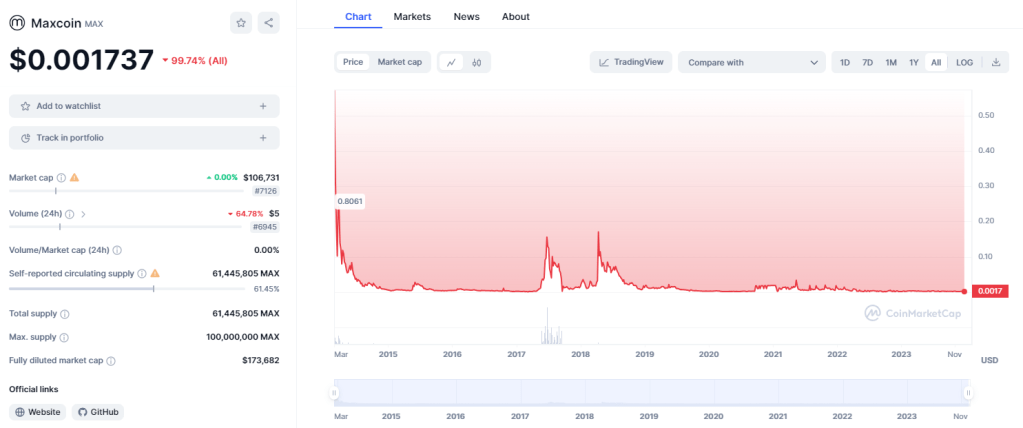
MaxCoin’s entry into the market was met with enthusiasm, with prices spiking to around $3 shortly after its launch. However, the initial excitement was short-lived, and the value plummeted swiftly. As of my latest exploration, the price is $0.001737 as of December 2023, indicating a considerable decline from its peak.
RENEWED DEVELOPMENT AND COMMUNITY GROWTH
Despite the setbacks, recent indications suggest a revival of interest in MaxCoin. The development team, as mentioned by core developer Luke Mitchell, is actively working on projects, debunking rumors of a project abandonment. The MaxCoin community, though weathering negative press, is expanding, hinting at potential future developments.
THE FUTURE OF MAXCOIN: KEISER’S CRYPTIC HINT
MAX KEISER’S TEASING TWEET
In May 2014, Max Keiser ignited speculation about a MaxCoin revival with a tweet hinting at a potential price surge. This cryptic message adds an intriguing layer to the MaxCoin narrative. Could there be more to MaxCoin’s story than its initial rise and fall? There is no mention of Maxcoin by Max in recent times, other than his critics bringing the topic up just to bash him.
CONCLUSION: UNRAVELING THE MYSTERY
In conclusion, Max Keiser’s endorsement of MaxCoin remains a captivating chapter in the crypto chronicles. The contradiction of a Bitcoin maximalist promoting an altcoin challenges the narratives we often associate with crypto figures. MaxCoin’s journey, from a promising launch to a subsequent fade, reflects the volatility inherent in the cryptocurrency space. And nope, I’m not buying any Maxcoin.



 1Bitcoiner.com
Leave a comment