Introduction
Welcome to the world of Bitcoin, where managing your Unspent Transaction Outputs (UTXOs) is not just a technical task but a critical aspect of ensuring the security and efficiency of your transactions. In this blog post, I’ll share my personal experiences and insights into UTXO management, exploring the nuances and best practices that every Bitcoin enthusiast should be aware of.
Understanding UTXOs
The Basics of UTXOs
To kick things off, let’s delve into the fundamental concept of UTXOs. What are they, and why do they matter in the Bitcoin ecosystem? We’ll break down the technicalities into digestible bits, providing a clear understanding for those new to the crypto space.
UTXOs and Bitcoin Transactions
Explore the intricacies of how UTXOs are involved in Bitcoin transactions. From sending and receiving to the role of change addresses, grasp the mechanics that make Bitcoin transactions secure and private.
Managing UTXOs: A Personal Journey
The Halving and Urgency of Accumulating Sats
Join me on my personal journey in the Bitcoin space, where the halving event serves as a reminder of the importance of stacking sats. Discover how upgrading my skills and consistently learning has become a strategy for increasing income and, consequently, the ability to accumulate more sats.
UTXO Cleanup Chronicles
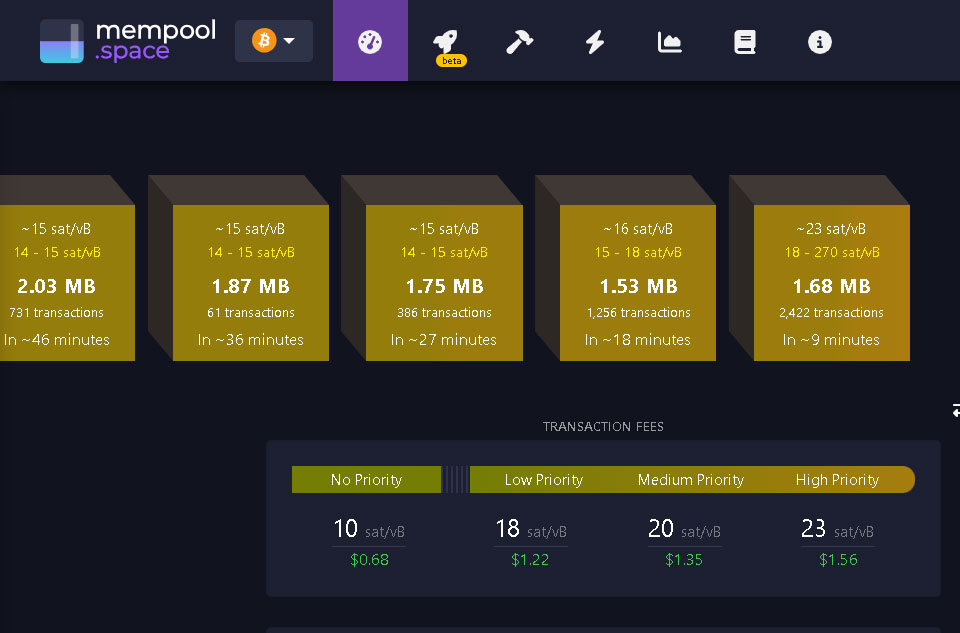
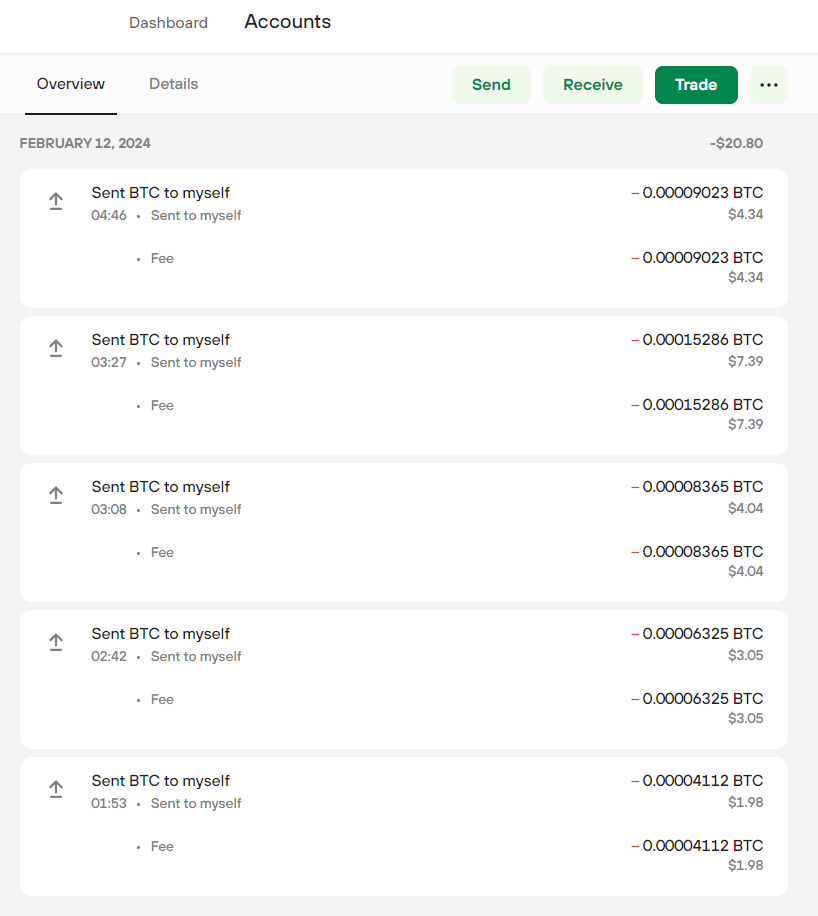
Dive into the nitty-gritty details of my recent UTXO cleanup. Understand the significance of consolidating small UTXOs, especially as we approach a Bitcoin landscape where transaction fees could potentially surpass the value of these small outputs.
Sparrow Wallet Insights
Unveiling Duplicate Addresses
Learn from my experience with Sparrow Wallet, where the detection of duplicate addresses raised concerns. Understand the potential issues associated with duplicate addresses and the steps to address and resolve them.
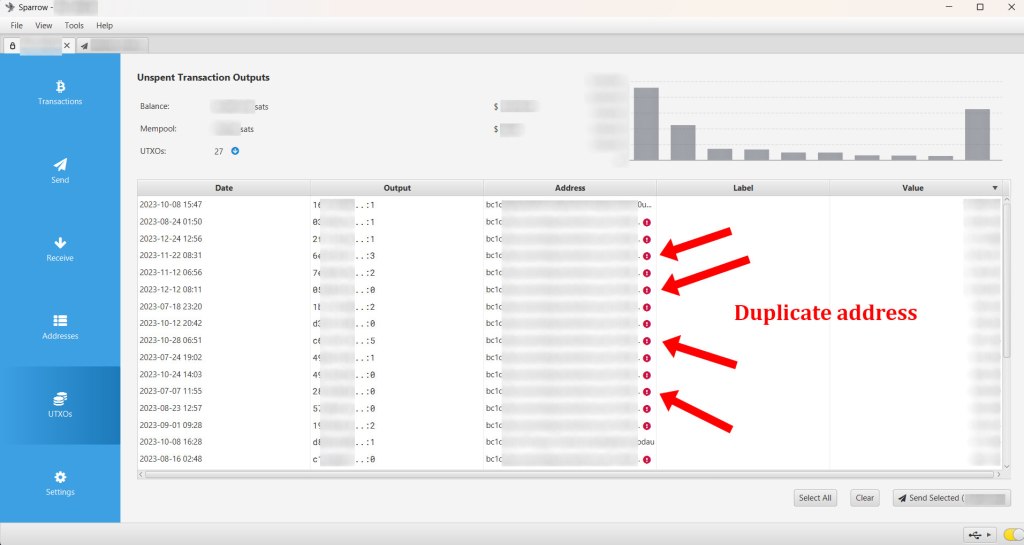
If Sparrow Wallet is displaying a ‘Duplicate address’ icon, it’s essential to address this situation to ensure the correctness and security of your Bitcoin transactions. Duplicate addresses might indicate an issue or confusion in the wallet, and it’s crucial to investigate and resolve it. Here are steps you can take:
Do Not Use Duplicate Addresses: Avoid using any duplicate addresses for transactions. Ensure that you are using unique addresses for sending and receiving Bitcoin.
Check Transaction History: Review your transaction history within Sparrow Wallet to identify if there are transactions associated with the duplicate addresses.
Confirm if any transactions were intended for these addresses.
Verify Wallet Balance: Verify your wallet balance to ensure that it accurately reflects your total Bitcoin holdings. Confirm that the duplicate addresses do not affect your overall balance.
Best Practices and Recommendations
UTXO address difference
In the Sparrow Wallet, as well as in other Bitcoin wallets, it’s common for the UTXO (Unspent Transaction Output) address to appear different from the receiving address you used. This discrepancy is typically due to the wallet’s internal address management, which involves privacy and security considerations.
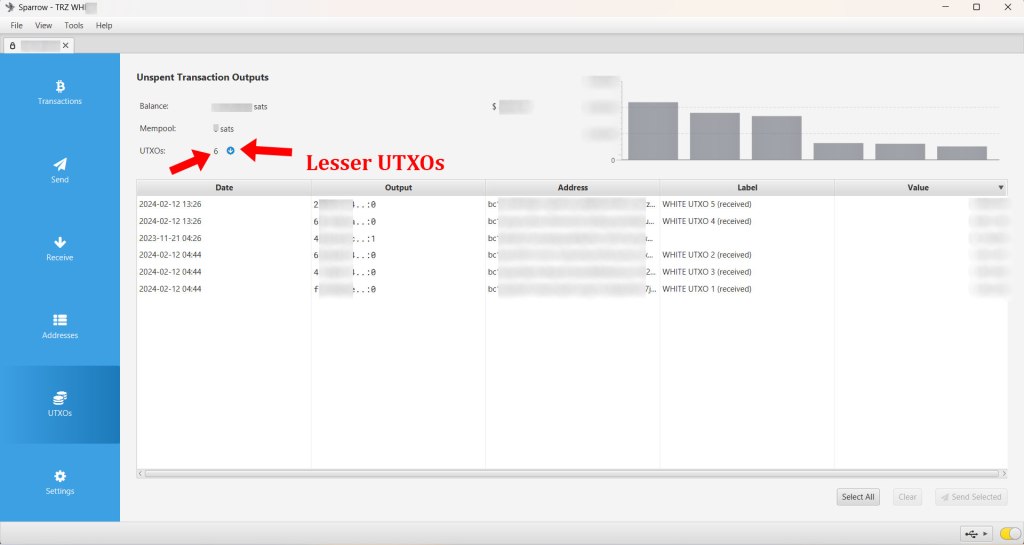
Here’s why this might happen:
Change Addresses: When you send a Bitcoin transaction, the wallet often generates a new address to receive the change. If you send, for example, 1 BTC from your hardware wallet to someone, but you had 2 BTC in your wallet, the remaining 1 BTC will be sent back to a change address.
Privacy: Using change addresses enhances privacy by making it more difficult for external observers to link different transactions to the same wallet. It adds a layer of complexity for anyone trying to analyze the blockchain and identify wallet balances or spending patterns.
Security: Change addresses also contribute to wallet security. If the change was sent back to the original address, it might be easier for potential attackers to track and potentially compromise your funds. Using a new address for change enhances security.
HD Wallets: Many modern wallets, including Sparrow, use Hierarchical Deterministic (HD) wallet structures. HD wallets generate a sequence of addresses from a single seed. While your receiving address may be derived from this seed, change addresses are also generated from the same seed but may not be immediately obvious.
If you have confirmed that the transaction was successful and the Bitcoin is now in the intended destination, there’s typically no need to worry about the change address being different. It’s a common practice for wallet privacy and security.
Conclusion
As we wrap up this journey through the intricacies of UTXO management, I invite you to share your thoughts and experiences. Leave a comment, and let’s build a community of Bitcoin enthusiasts exchanging knowledge and insights.
UTXO Management at a Glance: Key Differences
| Aspect | Traditional UTXO Management | Optimized UTXO Management |
|---|---|---|
| Transaction Efficiency | Ensures smooth and efficient transaction flow. | Maximizes transaction efficiency, reducing fees. |
| Privacy Enhancement | Limited privacy measures. | Implements strategies for enhanced anonymity. |
| Security Measures | Standard security protocols. | Emphasizes additional layers of wallet security. |
| Consolidation Benefits | Limited consolidation practices. | Actively consolidates for fee optimization. |
This objective summary aims to guide you in making informed decisions as you navigate the evolving landscape of Bitcoin and UTXO management. Remember, every satoshi counts in this digital revolution!





Leave a Reply